
Introduction: Why Plate Choice Still Matters in 2026
Let’s be honest—fracture repair isn’t what it was ten years ago. Veterinary orthopedics has evolved fast. New materials, smarter designs, minimally invasive approaches… it’s a different world.
And yet, one debate refuses to disappear: locking plates vs. non-locking plates.
If technology keeps advancing, why are we still discussing this? Because plate choice still determines stability, healing speed, complication rates, surgical time, and—yes—profitability. In 2026, the question isn’t which is better overall. It’s which is better for this patient, right now?
The Evolution of Veterinary Bone Plating
From Basic Compression to Advanced Locking Systems
Originally, bone plates functioned like clamps. Surgeons compressed the plate against the bone, relying on friction between plate and cortex. Stability depended heavily on screw torque and bone quality.
Fast forward to today, and locking systems behave more like internal external-fixators. Screws lock into the plate, creating a rigid angular construct. The plate doesn’t need to crush against the bone anymore.
That shift changed everything.
The Influence of AO Principles in Veterinary Surgery
AO concepts revolutionized fracture fixation in both human and veterinary medicine. Absolute stability? Relative stability? Biological fixation? These aren’t buzzwords—they’re decision-making tools.
Locking plates aligned beautifully with biological osteosynthesis. Non-locking plates? Still extremely effective when applied correctly.
So the evolution didn’t eliminate one system. It expanded options.
What Are Non-Locking Plates?
How Non-Locking Plates Work
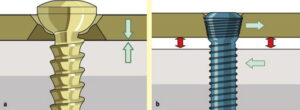
Non-locking plates rely on screw compression. As the screw tightens, it pulls the plate toward the bone surface. Friction between plate and bone generates stability.
Think of it like tightening a clamp onto wood. The tighter you go, the stronger the hold.
Indications for Non-Locking Plates
Simple transverse fractures
Good bone quality
Young, healthy patients
Cases requiring precise compression
When compression is the goal, traditional plates still shine.
Advantages of Non-Locking Plates
Lower cost
Excellent compression capability
Familiar technique for many surgeons
Wide availability globally
In many parts of the world, cost still drives decision-making. Non-locking systems remain practical and reliable.
Limitations of Non-Locking Plates
Dependent on bone quality
Risk of screw loosening
Periosteal blood supply disruption
Less ideal for osteoporotic patients
In weak bone, friction alone isn’t always enough.
What Are Locking Plates?
How Locking Plate Technology Works
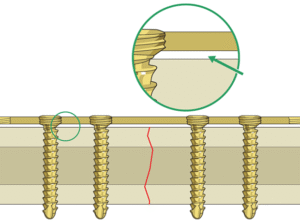
Locking screws thread into the plate itself. Once tightened, screw and plate become a single fixed-angle unit.
It’s like building a scaffolding system inside the limb. Stability doesn’t rely on bone compression—it relies on angular rigidity.
Types of Locking Systems in 2026
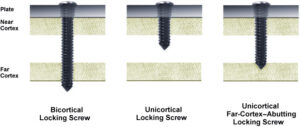
Unicortical Locking
Allows secure fixation without engaging both cortices—useful in minimally invasive procedures.
Polyaxial Locking
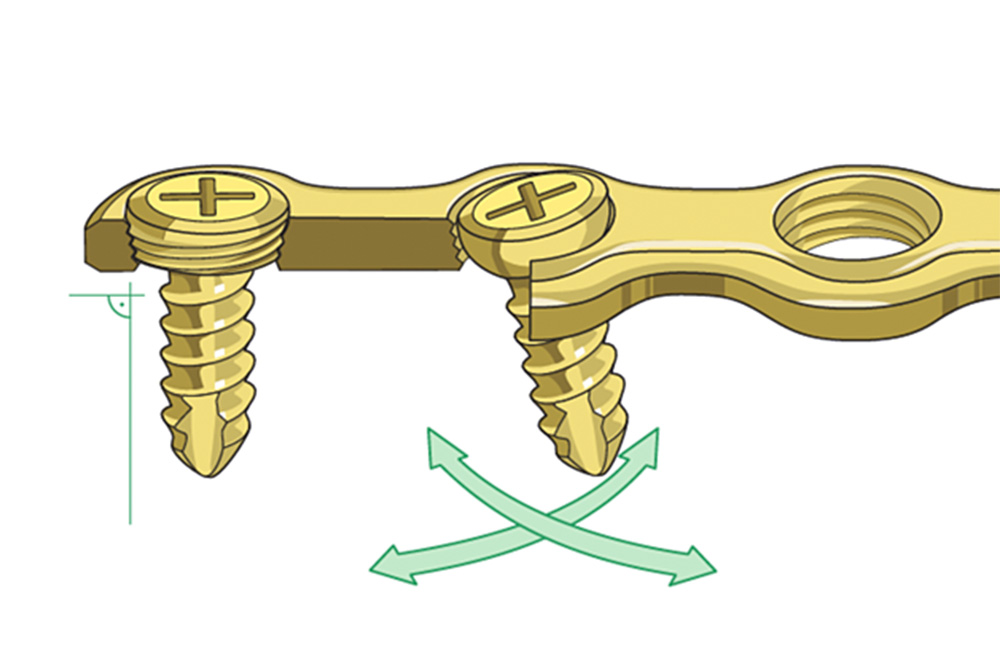
Permits screw angulation flexibility while maintaining locking capability.
Hybrid Locking-Compression Systems
Combine compression holes and locking holes in one plate. Flexibility is the keyword here.
Advantages of Locking Plates
Superior stability in poor bone
Reduced screw loosening
Better suited for MIPO
Less dependence on plate-bone friction
They’re particularly helpful in geriatric or large-breed fracture repairs.
Limitations of Locking Plates
Higher cost
Requires precise technique
Risk of overly rigid fixation
Too rigid? Yes. Bone healing needs controlled strain. Absolute rigidity isn’t always ideal.
Biomechanical Differences: Stability Compared
Here’s the core difference:
Non-locking = friction-based stability
Locking = fixed-angle construct
Locking constructs distribute load across the entire system. Non-locking systems concentrate stress at the bone-plate interface.
Which is better? Depends on fracture pattern and biological environment.
Clinical Applications: When Do Vets Choose Each?
Small Breed Fractures
Toy breeds often have fragile cortices. Locking plates reduce the risk of screw pullout.
Large Breed & Working Dogs
High load demands favor locking constructs, especially in comminuted fractures.
Feline Orthopedics
Cats heal well, but their bone diameter is small. Hybrid systems are increasingly preferred.
Osteoporotic or Geriatric Patients
Locking systems dominate here. Bone quality simply can’t provide reliable friction.
Cost Considerations in 2026
Yes, locking plates are still more expensive. But complication management is even more expensive.
Many clinics now analyze:
Implant cost
Revision risk
Surgery time
Client affordability
The real question becomes: Is the higher implant price offset by reduced complications?
Often, yes.
Surgical Learning Curve and Skill Requirements
Non-locking plates demand precise contouring and compression technique.
Locking systems demand spatial awareness and pre-planning.
Neither is “easy.” They’re just different skill sets.
Complication Rates and Long-Term Outcomes
Studies over the past decade show:
Lower screw loosening with locking plates
Similar union rates overall
Reduced implant failure in complex fractures
But misuse of locking plates can lead to delayed union due to excessive rigidity.
Technology doesn’t replace judgment.
Minimally Invasive Plate Osteosynthesis (MIPO) Trends
MIPO continues to grow in popularity. And guess what? Locking plates integrate beautifully with this technique.
Because the plate doesn’t need to compress against bone, periosteal blood supply remains better preserved.
Biology wins.
Emerging Technologies Impacting Plate Preference
3D-Printed Patient-Specific Plates
Custom-fit plates reduce contouring time and improve accuracy.
Smart Implants and Data Integration
In 2026, research is exploring load-monitoring implants. Imagine tracking healing progress digitally. Sci-fi? Not anymore.
What Do Vets Actually Prefer in 2026?
Market data suggests:
Locking plates dominate referral hospitals
General practices still widely use non-locking systems
Hybrid systems are fastest-growing segment
So what’s the answer?
Vets prefer flexibility.
They want systems that allow compression when needed and locking stability when required.
Hybrid Approaches: The Best of Both Worlds
Modern plates often include:
Compression slots
Locking holes
Variable-angle capability
Why choose one philosophy when you can combine both?
This isn’t a battle anymore. It’s integration.
Decision-Making Framework for Veterinary Surgeons
Ask yourself:
What is the fracture pattern?
What is the bone quality?
What loads will the limb bear?
What is the client’s budget?
What is my surgical experience?
Answer these honestly, and the choice becomes clear.
Conclusion: The Future of Fracture Fixation
So, locking plates or non-locking plates?
In 2026, the smartest surgeons don’t choose sides. They choose cases.
Locking plates offer stability in challenging environments. Non-locking plates offer elegant compression in straightforward fractures.
The real trend isn’t replacement—it’s refinement.
And maybe that’s the biggest lesson in veterinary orthopedics: progress doesn’t erase the past. It builds on it.
Because at the end of the day, it’s not about the implant.
It’s about the patient walking again.